
Custom 3D Scanning System for Deformable Objects
At botspot, our work has always revolved around pushing the boundaries of what's possible with 3D scanning, building systems that offer precision, speed and versatility for a wide range of industries. Our NEO full-body scanner has long been a benchmark for ultra-high-resolution, instantaneous capture. But sometimes a customer's challenge doesn't fit neatly into anything we already build: the object is smaller, the question is different, and the technology needs to be reimagined. That was the case when a university in canada came to us with a project none of our scanners were built for.
The research team was developing software that turns a physical object into a digital twin. One that deforms in the virtual world exactly as its physical counterpart deforms in someone's hands. Scan an object, reshape it, scan it again and the software carries that transformation over automatically. For that to work, every scan had to be a single, simultaneous capture: every camera firing at the same instant, with nothing in the process itself able to be mistaken for the deformation they were trying to measure. What they needed, in short, was a miniature NEO full-body scanner.
Why Did This Project Need a Custom Scanner?
The idea took shape the way most of our custom projects do: as a conversation about what the user actually needed, not what a standard rig could offer. The scan objects here were figurine-sized, typically 10 to 20 cm and never more than 30 cm across - a completely different scale than a full-body capture.
Working at that scale changed the engineering problem in some fundamental ways. The scan volume itself, a 30 cm cylinder that had to stay in sharp focus from edge to edge, meant camera distance and focal length had to be worked out with real precision, since even a small margin of error would take part of the object out of focus. And because the university also needed usable image data as the foundation for their own software, not just a finished mesh, the capture itself had to be clean and consistent every time, with lighting that stayed exactly the same from one scan to the next.
That's where our proprietary Digital Spray technology came in again, just as it has in other systems, a non-contact projection method that improves surface recognizability, integrated here in a compact configuration suited to a much smaller working space. Paired with a dome of 40 Canon R100 cameras arranged around the scan volume and a continuous LED lighting setup, the system could deliver consistent, evenly lit captures without relying on flash photography or repeated test shots to check exposure.
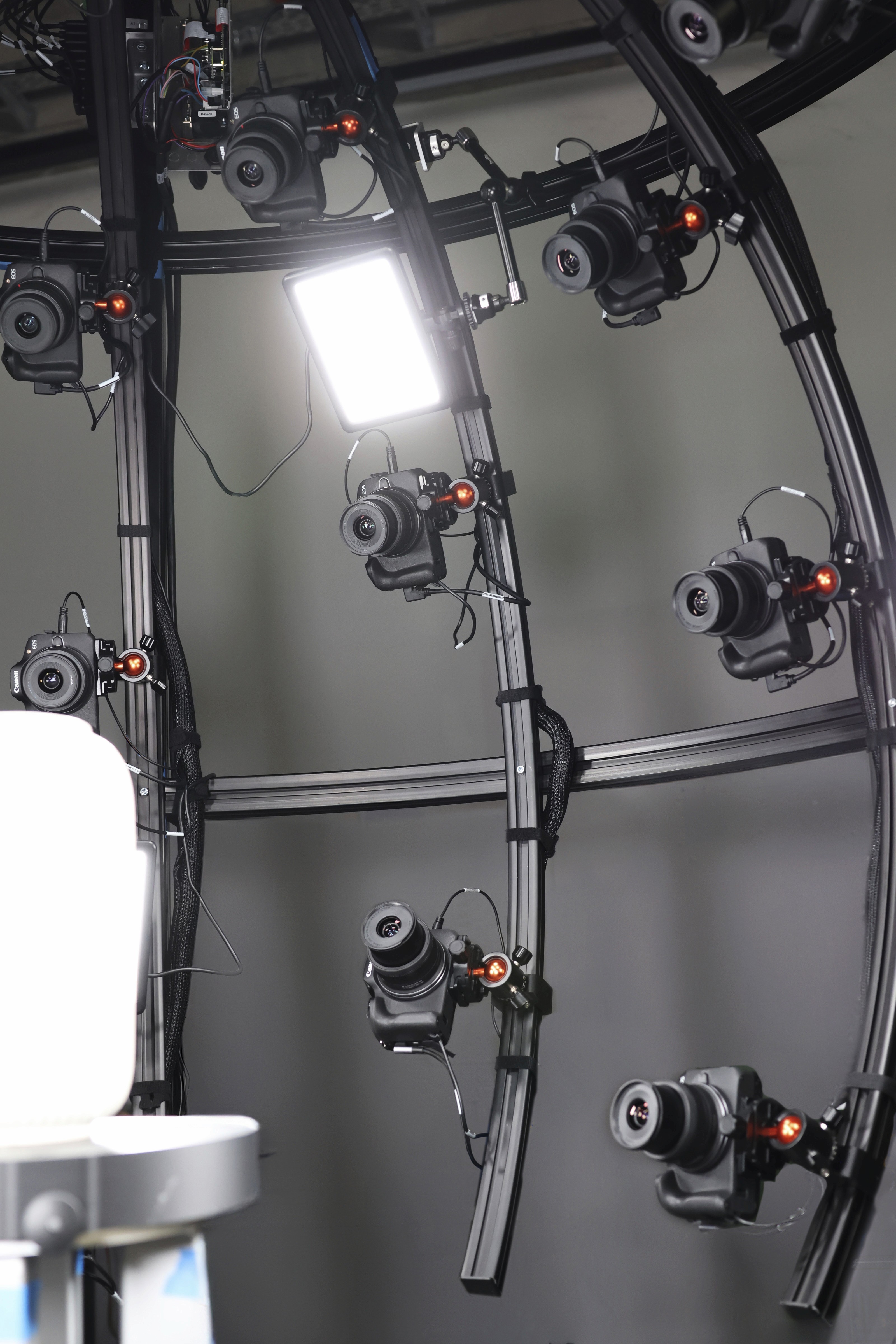
Why Not Use a Turntable Scanner for Deformable Objects?
A scanner like this lives in a lab and has to work for the people running it: comfortable at standing height, cameras permanently mounted but the object still easy to reach - and above all, nothing in the setup could introduce its own movement. The object had to return to precisely the same position for every single scan, since even a small shift in orientation could be mistaken for the deformation the software was trying to detect.
That ruled out the obvious fix. A turntable is the simplest way to access an object from every side - it's exactly how our Momentum 2.0 and Studio Scanner work, using a relatively small set of cameras, often five to seven, that fire step by step as the object rotates. But rotation risks the object shifting slightly with every turn and can't guarantee the same starting position twice - precisely the variable this project couldn't tolerate.
An all-at-once camera rig sidesteps that entirely: dozens of cameras arranged around the object fire together in a single instant. No rotation, no waiting between angles, no drift - every viewpoint captured at exactly the same moment, from a camera that never moved. Faster turnover per scan, and datasets that are inherently consistent, because every angle reflects the object in precisely the same state.
How Is the Scan Data Captured & Processed?

As with all of our systems, the hardware is only half the story. The rig is driven by our Automation Suite Software running on a dedicated backend NUC alongside a separate calculation PC, splitting real-time camera control from the processing work needed to turn 40 simultaneous images into usable data. That data is exactly what the university's own software depends on: the raw material & meshes their digital-twin pipeline uses to track deformation between one scan and the next.
What Does the Finished Scanner Do Today?
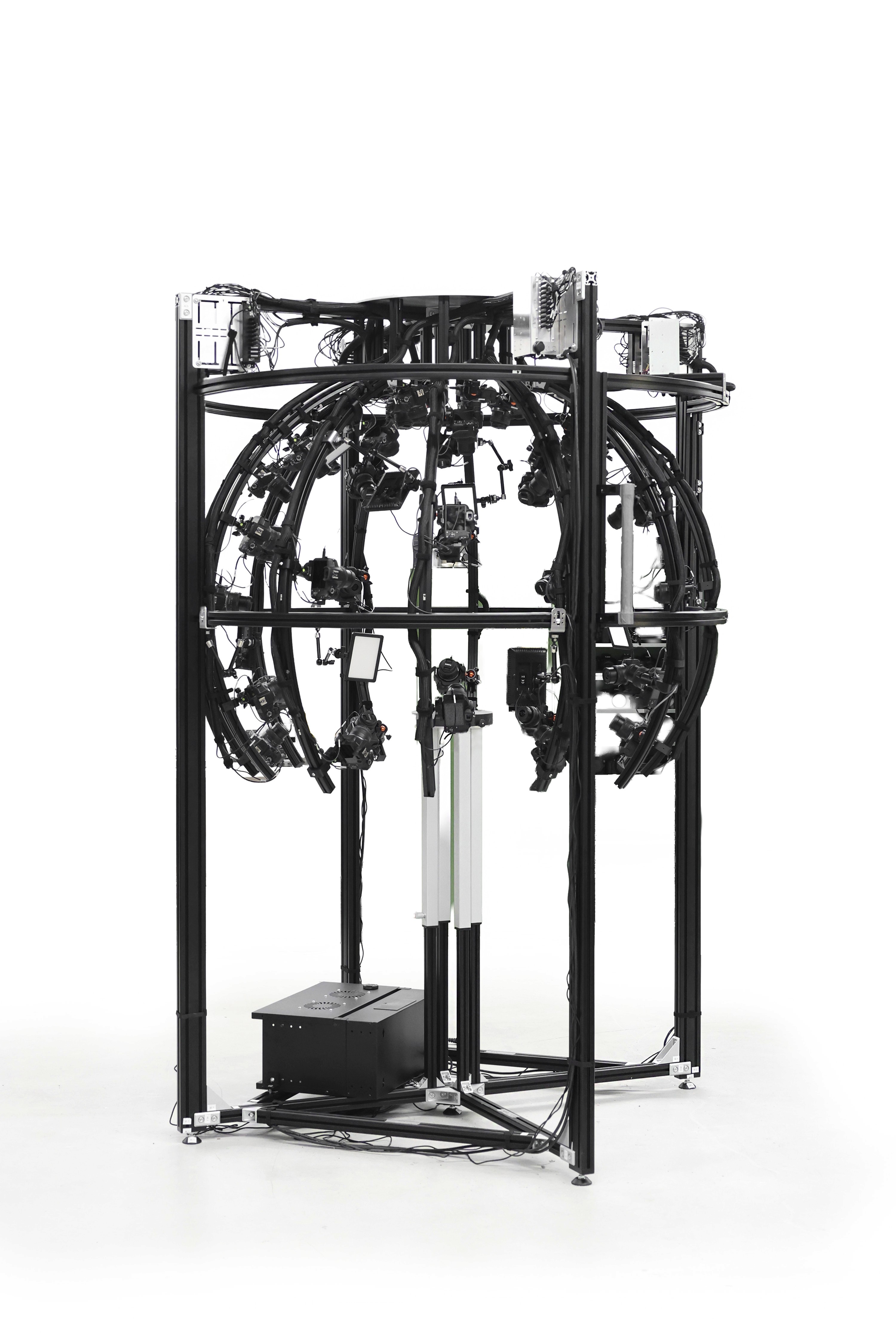
After months of development, the result is a new custom kind of scanner in our lineup: a compact, dome-based system built specifically for capturing small, deformable objects in a single simultaneous shot. It doesn't replace anything else we build, the NEO remains the benchmark for full-body, ultra-high-resolution work & the object scanners Momentum 2.0 and Studio Scanner still have their place as turntable solutions, but this new system opens the door to more opportunities and more projects.
The finished system is now set up and running in a university in Canada, where it will spend its working life scanning objects, over and over, and giving researchers the data they need to teach a digital twin how to move.
Have a project which requires a custom scanning solution? Contact us and learn how we can help you


From Physical 3D Capture to Digital Character

Why Laser Body Scanners Fall Short And When Photogrammetry Is the Better Choice
Industries Where Millimeters Matter: Why These Sectors Rely on High-Accuracy 3D Body Scanning
5 Things Cheap 3D Body Scanners Can't Do (That Professional Ones Can)
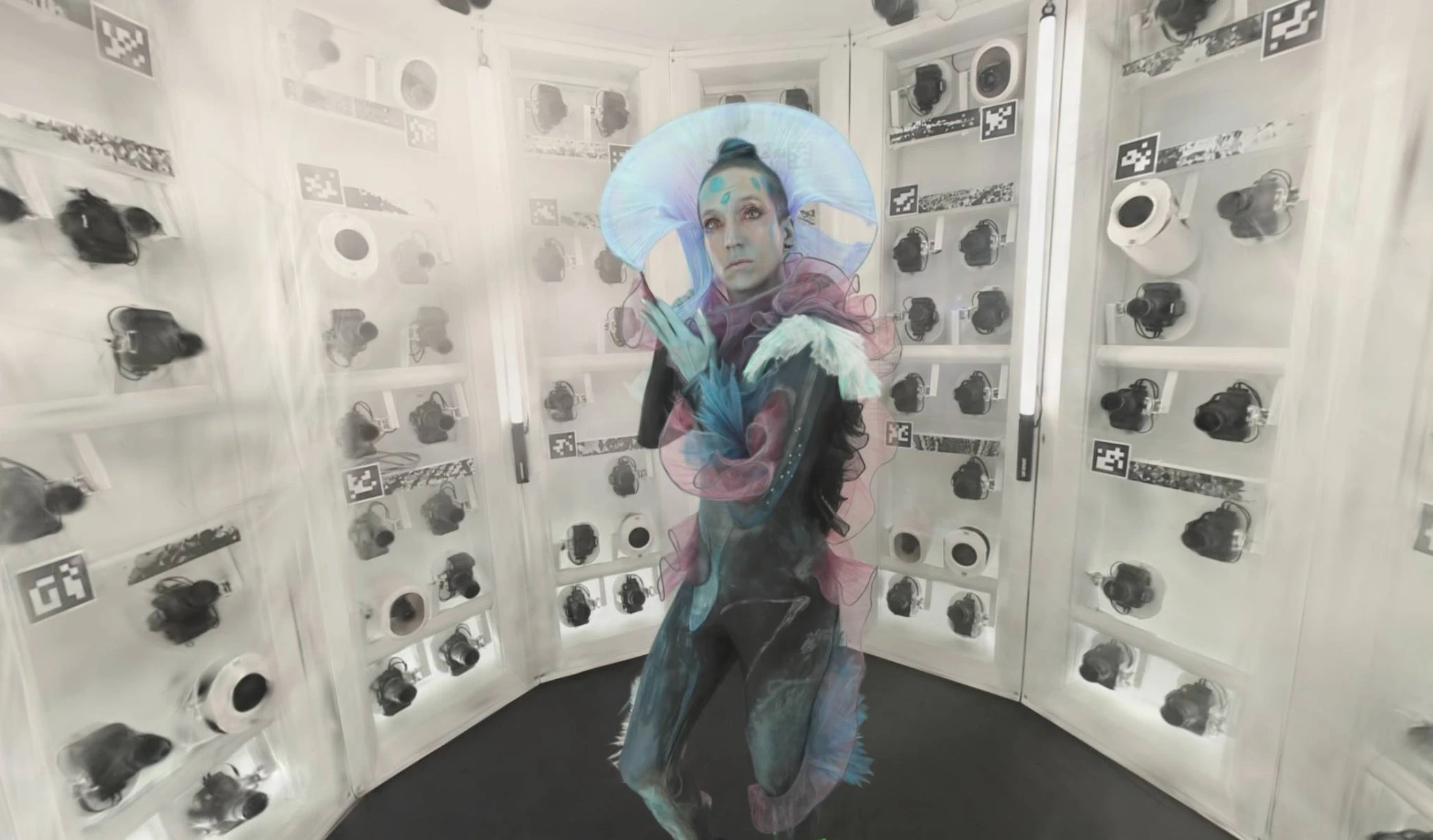
Augmented Ubiquity: The First 4D Gaussian Splat Captured with a botspot Scanner
360° Photography with the Momentum 2.0