
From Physical 3D Capture to Digital Character
For his Becoming Blocky project, 3D artist Julian Blockschmidt explored how a real person can become the reference point for a complete digital character and fashion workflow.
A high-resolution full-body scan captured with the botspot NEO provided detailed visual and dimensional reference data. From there, Blockschmidt developed the final character separately using MetaHuman, before continuing the workflow with Adobe Substance 3D, CLO3D, Rokoko and Unreal Engine.
The result is a strong example of how professional 3D capture can connect the physical world with digital humans, virtual fashion and real-time creative production.
Capturing the Physical Reference
The project started with a full-body scan inside the botspot NEO.
Instead of capturing a person sequentially from different positions, the NEO uses a large number of synchronized cameras surrounding the subject. The image data is captured almost simultaneously, reducing movement between perspectives and creating a consistent dataset for photogrammetric reconstruction.
For Blockschmidt, the resulting scan provided a detailed digital representation of his real appearance, proportions, and individual characteristics.
From Image Data to a 3D Reconstruction
After capture, the synchronized image dataset was processed into a high-resolution 3D reconstruction.
The resulting model made it possible to inspect the captured subject digitally and provided detailed visual and dimensional information for the next stages of the project.
Importantly, the scan was not directly converted into the final MetaHuman. Instead, it served primarily as a reference throughout the character-development process.
Using the Scan as a Digital Reference
One of the most important distinctions in workflows like this is that a 3D scan and a production-ready digital human are not the same thing.
The scan provides geometry and visual information from the real subject. A character intended for animation, fashion simulation, or cinematic rendering has different requirements: topology must support deformation, materials must behave correctly, facial and body systems need to be controllable, and the character has to integrate with the rest of the production pipeline.
Blockschmidt therefore treated the captured physical reference as one component within a much larger creative process rather than simply using a raw scan as the finished asset.
Building the Blocky MetaHuman
Using the physical scan as reference material, Blockschmidt developed the digital character with MetaHuman.
Rather than recreating the scanned person one-to-one, the character was designed to retain recognizable characteristics while functioning within a professional real-time production environment.
This made it possible to take the character beyond a static digital double and prepare it for animation, facial performance, virtual clothing, and further artistic interpretation.

Developing the Digital Identity
The character was further refined using Adobe Substance 3D, helping shape the distinctive visual identity of the Blocky character.
Materials, surface details, and styling became part of the creative process rather than simply reproducing physical reality.
This is where the workflow moves from digital replication toward digital interpretation: the real person provides the reference, while the final character can evolve beyond the constraints of the original scan.
Creating the Virtual Fashion in CLO3D
With the character established, the workflow expanded into digital fashion.
Garments were created in CLO3D and incorporated through a LiveSync workflow. Rather than treating clothing as static geometry, the garments could be simulated around the character and react to movement.
The character and clothing therefore became part of the same digital production process, connecting digital human creation with virtual fashion design.
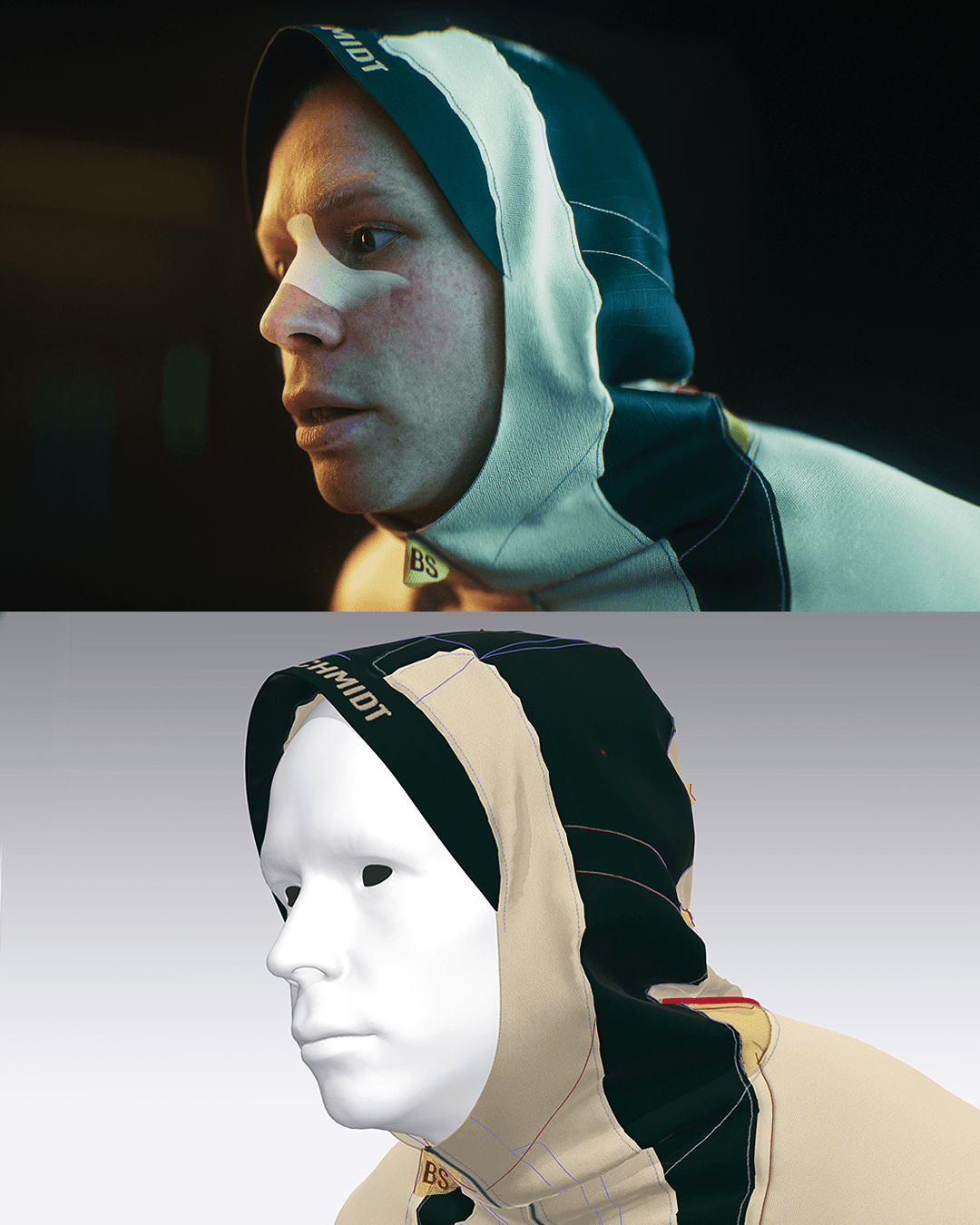
Adding Performance and Bringing Everything Together
To bring the character to life, Blockschmidt incorporated Rokoko performance capture into the workflow.
Movement, character animation and simulated clothing could then be combined inside Unreal Engine, together with the materials, environment, lighting and cameras required for the final artwork.
Unreal Engine became the central production environment in which the different elements of the project came together.
From Physical Capture to Final Artwork
The Becoming Blocky project demonstrates how 3D scanning can play a role far beyond simply producing a finished 3D model.
Here, the scan acted as the physical reference layer within a broader digital ecosystem:
Physical person → 3D capture → digital reference → MetaHuman → virtual fashion → performance → final artwork
For botspot, this is an especially relevant use case because it shows how professional capture data can become the starting point for specialized digital workflows in areas such as digital humans, fashion, animation and real-time production.
3D Scanning for Digital Humans & Virtual Fashion
Professional full-body scanning can provide accurate visual and dimensional reference data for digital-human, fashion, animation and real-time production workflows.
Can a 3D scan be used to create a MetaHuman?
Why use photogrammetry for full-body scanning?
Can 3D scanning be used for digital fashion workflows?
Does the scanned model need to be the final digital character?
What is the advantage of using a professional full-body scanner?


Custom 3D Scanning System for Deformable Objects

Why Laser Body Scanners Fall Short And When Photogrammetry Is the Better Choice
Industries Where Millimeters Matter: Why These Sectors Rely on High-Accuracy 3D Body Scanning
5 Things Cheap 3D Body Scanners Can't Do (That Professional Ones Can)
Augmented Ubiquity: The First 4D Gaussian Splat Captured with a botspot Scanner

360° Photography with the Momentum 2.0