Industries Where Millimeters Matter: Why These Sectors Rely on High-Accuracy 3D Body Scanning
Precision is not a luxury in every field. In some industries, a measurement error of a few millimeters is an inconvenience. In others, it is the difference between a product that works and one that fails, or between a clinical decision that helps and one that harms. As 3D body scanning technology has matured from a niche research tool into a production-ready solution, the sectors that have adopted it most aggressively are exactly those where human body data needs to be trusted absolutely.
This article looks at the industries where millimeter-level accuracy in 3D body scanning is not a selling point but a baseline requirement, and why the technology is becoming infrastructure rather than an optional upgrade.
What We Mean by High-Accuracy 3D Body Scanning
Before diving into applications, it's worth defining the standard. High-accuracy 3D body scanning refers to systems capable of capturing full-body geometry with sub-millimeter surface precision, consistent repeatability across sessions, and clean, complete mesh output that integrates reliably with downstream software pipelines.
This is distinct from consumer-grade scanning solutions, depth-sensor apps, or budget photogrammetry rigs that may produce visually plausible models but carry measurement errors of five millimeters or more. For casual visualization, that margin is acceptable. For the sectors below, it is not.
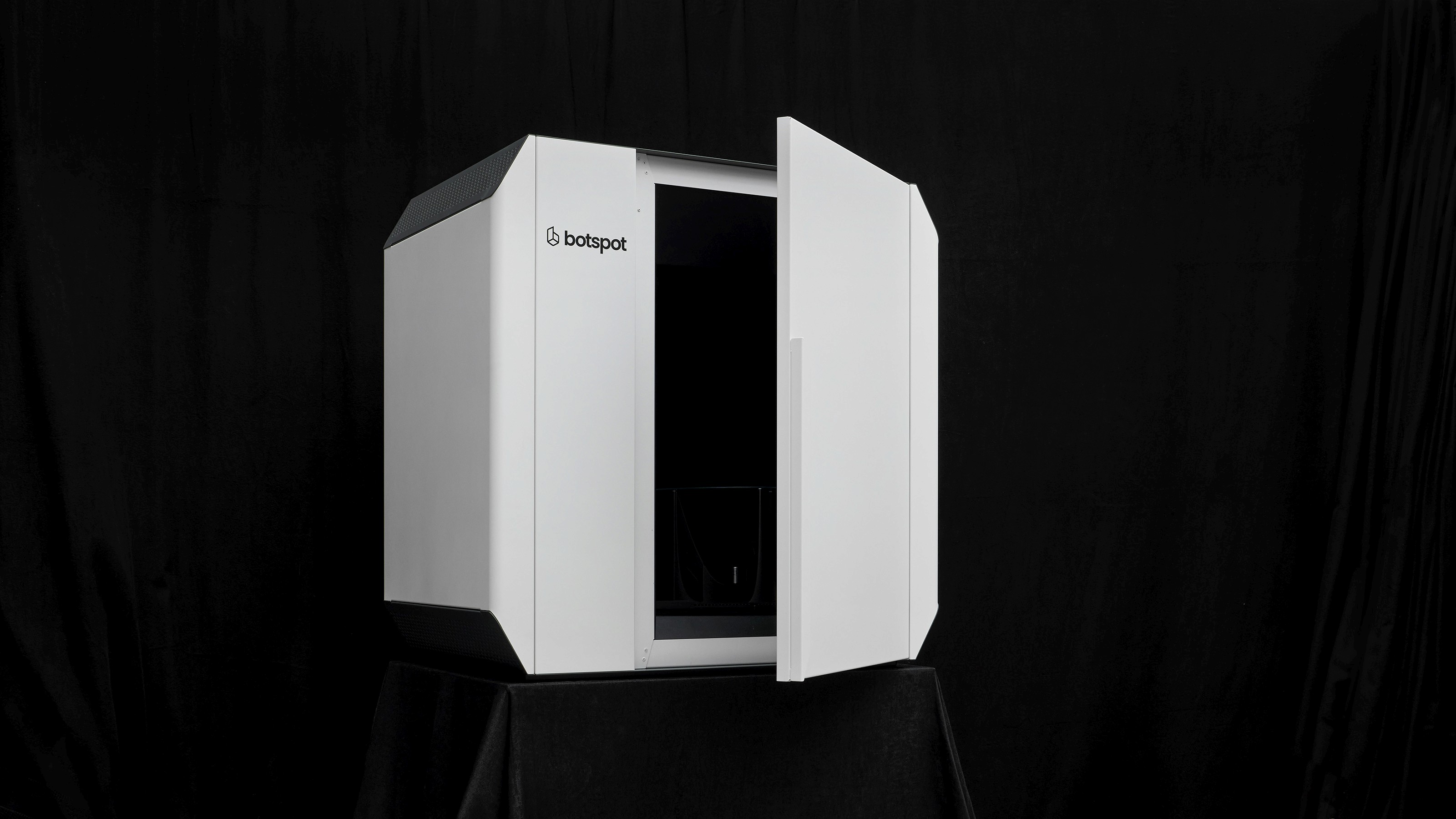
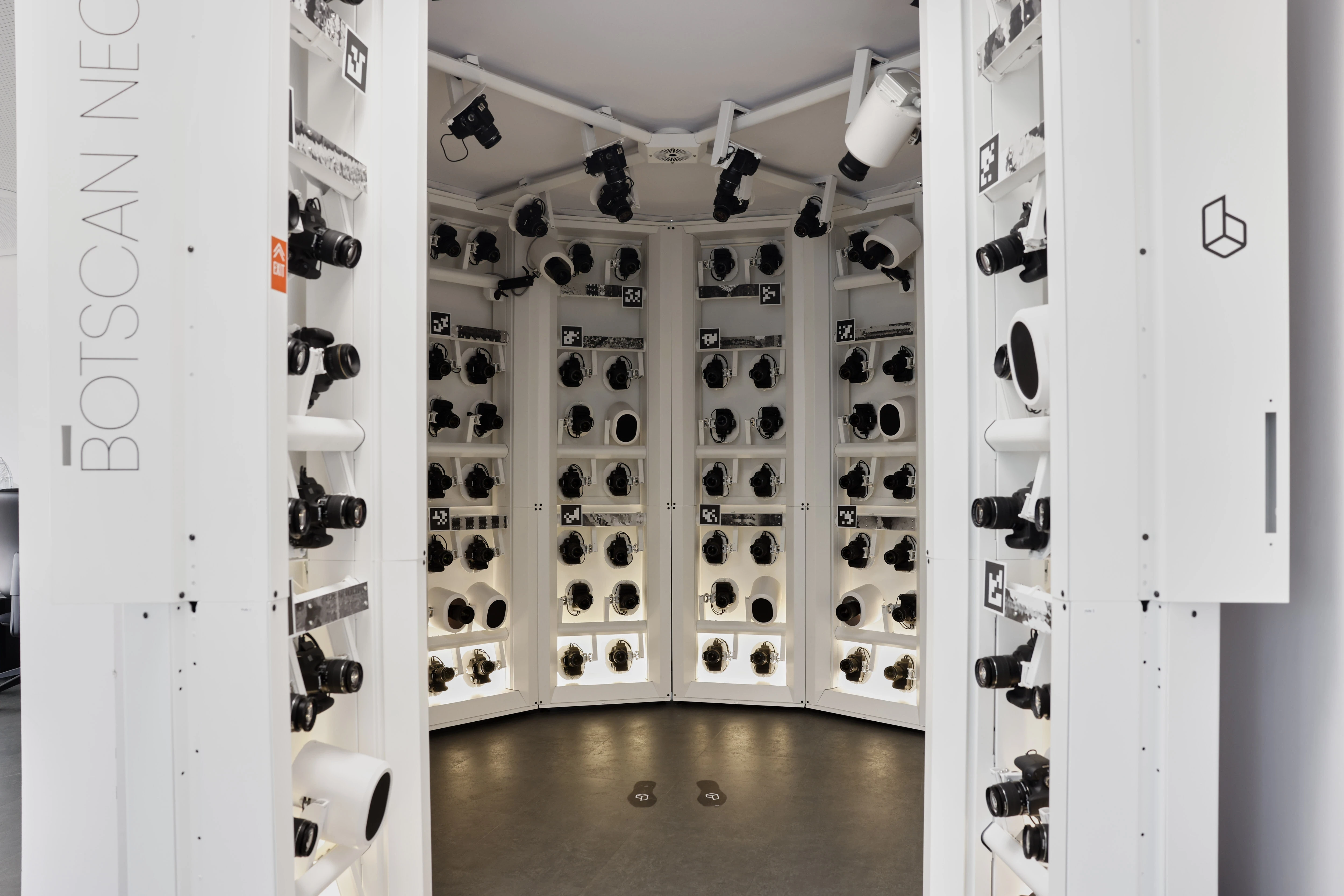
Key performance indicators for professional-grade systems include simultaneous multi-camera capture to eliminate motion artifacts, controlled and consistent lighting, automated calibration, and output formats compatible with industry-standard tools. Systems like botspot’s NEO Full-Body Scanner, with 160 synchronized cameras firing in a single instant, represent the current benchmark for this category. As botspot's guide to photogrammetry rigs notes, for people and animals simultaneous capture is essential — even micro-movements like breathing can cause misalignments that are very difficult to correct in post-processing.
Fashion and Apparel: Where Fit Is the Product
The fashion industry has a measurement problem that has persisted for decades. Inconsistent sizing across brands, high return rates driven by poor fit, and the growing consumer expectation of personalized garments have all pushed apparel companies toward body data as a core operational asset.
3D body scanning for fashion addresses this at multiple levels. At the consumer end, scanning enables made-to-measure services to operate at scale, taking the precise measurements needed for custom pattern generation without the time and variability of manual tape measurement. At the industry level, aggregated scan data from diverse populations is reshaping how brands define their size grids, replacing legacy sizing tables built on outdated and unrepresentative surveys.
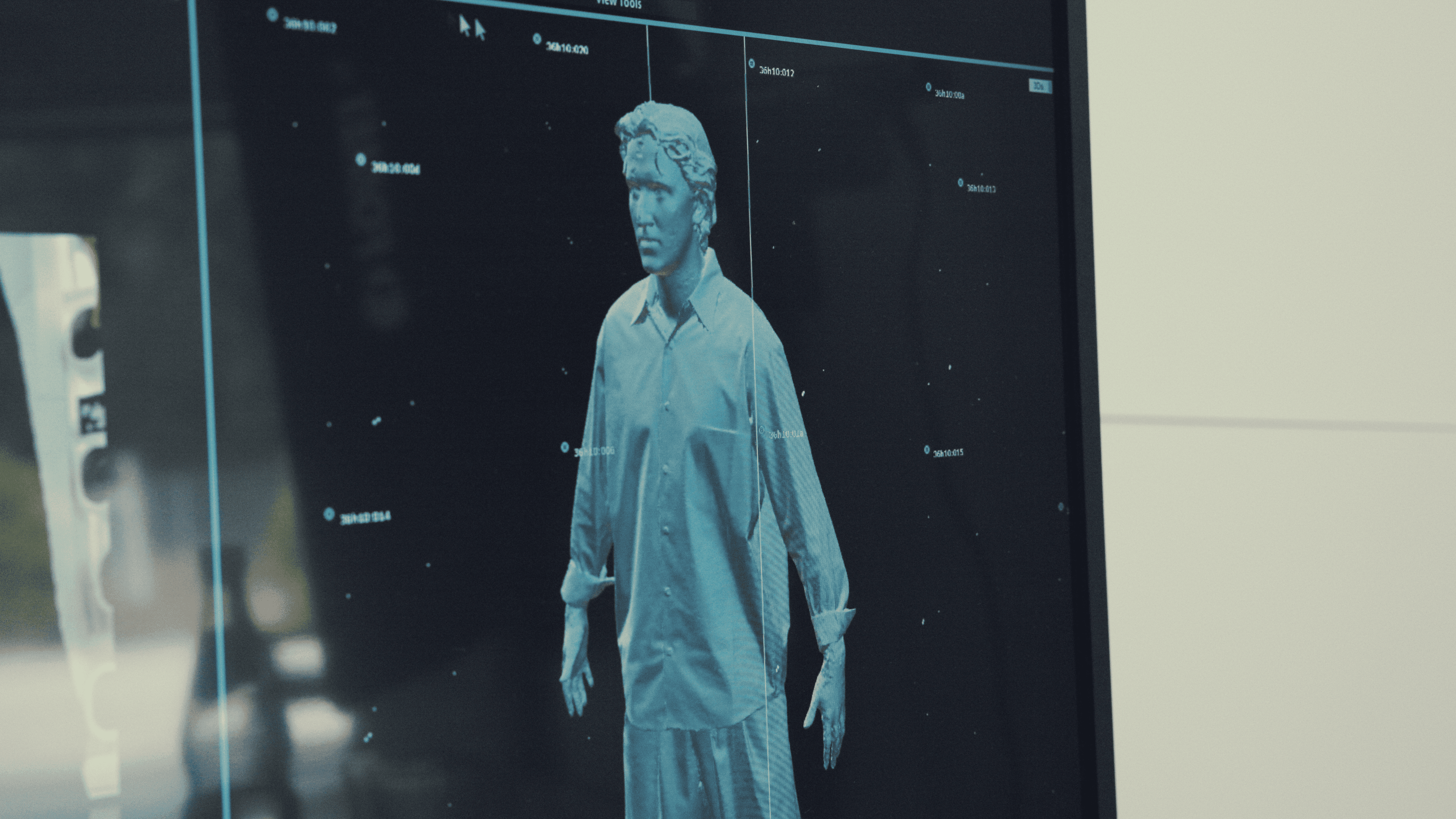
The accuracy requirement here comes from garment physics. A difference of three millimeters in a chest measurement affects how a jacket sits across the shoulders. A five-millimeter variance in hip circumference changes the drape of a fitted skirt. Measurement extraction software can pull dozens of standardized anthropometric measurements from a single scan, but only if the underlying geometry is accurate and complete. Scans with surface noise, mesh holes, or scale drift produce measurement errors that flow silently into pattern files, sample garments, and eventually the end product.
An additional challenge specific to fashion is surface variety. Dark fabrics, monochrome textiles, and glossy materials are notoriously difficult for standard photogrammetry to capture accurately. botspot's Digital Spray technology addresses this directly by projecting a high-contrast noise pattern onto surfaces that lack natural texture, giving the reconstruction algorithm rich feature data without requiring any physical preparation of the garment. This makes it possible to scan the full range of fashion materials — including plain black clothing and shiny fabrics — with the same accuracy as naturally textured surfaces.
Leading brands and platforms working on virtual try-on and digital sizing are already integrating high-accuracy scan data into their pipelines. The Human Solutions Group has long used body scan data to inform sizing research, and the SizeUSA and SizeUK surveys established population-level datasets that continue to influence how brands approach size standardization.
Healthcare and Clinical Medicine: Where Accuracy Affects Outcomes
Prosthetics and orthotics represent one of the most established clinical applications. As botspot's dedicated article on how 3D scanning is advancing prosthetic design explains, fabricating a prosthetic limb requires precise geometry of the residual limb — and a socket that fits even a few millimeters too tight or too loose can cause discomfort, skin irritation, or restricted mobility. Photogrammetric systems like the NEO and FLEX capture complete geometric data in a single instant, even if the patient moves, producing a precise digital replica that represents the limb in its natural state without distortion. Digital records can also be archived, allowing prosthetists to track anatomical changes over time or quickly generate updated prosthetics for patients who are growing, healing, or experiencing changes in limb volume.
Medical education and organ visualization are also being transformed by scanning technology. botspot's collaboration with MedReality demonstrates how photogrammetric scanning of real human organs — using botspot's Momentum scanner — is enabling medical students and clinicians to study true-to-life 3D models rather than generic computer-generated approximations. This matters for accuracy: a scan of a real organ captures the individual characteristics and anomalies that students will encounter in clinical practice, preparing them in ways that standardized models cannot.
Scoliosis monitoring and spinal assessment are emerging applications where 3D surface scanning complements or reduces reliance on radiation-based imaging. Studies published in journals including Spine have explored the correlation between surface topography and underlying spinal curvature. Regular, non-invasive scanning allows clinicians to track progression over time without repeated X-ray exposure — particularly valuable in pediatric patients monitored over years.
Body composition and obesity medicine are also integrating scanning data. While traditional metrics like BMI remain in widespread clinical use, they are increasingly recognized as insufficient indicators of metabolic health. 3D body scan data enables more nuanced assessment of fat distribution, waist-to-hip ratios, and body shape phenotypes that correlate more meaningfully with cardiovascular and metabolic risk.
In all of these contexts, the clinical value of the data depends entirely on its accuracy. An error that would be invisible in a fashion visualization could invalidate a clinical measurement or produce a device that harms the patient it was designed to help.
Film, VFX, and Game Production: Where the Body Becomes a Digital Asset
The entertainment industry's relationship with 3D body scanning is well established, but the demands on that technology have grown substantially as production standards have risen.
3D body scanning for film and VFX has moved beyond simple reference capture. Digital doubles used in high-action sequences or fully CG characters require scan data accurate enough to serve as the geometric foundation for rigging, simulation, and rendering. A digital double built from imprecise scan geometry carries those inaccuracies through every downstream step — in the clothing simulation, in the muscle and skin deformation, in the lighting response of the surface.
The same applies to game character scanning, where photorealistic human characters in AAA productions are routinely built from scan data. Studios working at this level require clean, high-resolution mesh output that integrates without extensive clean-up into their production pipelines. The NEO supports this through an optional face package, where cameras pointing toward the face are fitted with 50mm lenses to capture higher-definition facial texture, while remaining cameras cover the full body.
Emerging capture formats raise the bar further. 4D Gaussian Splatting and other volumetric video techniques require multi-camera setups with precise calibration and synchronization as their input stage. Artifacts introduced at capture cannot be removed in post-production — they become embedded in the trained model. Productions exploring these formats need scanning infrastructure that was engineered for accuracy, not adapted from budget hardware.
Sports Science and Performance Analytics: Measuring the Athlete
Elite sport operates on marginal gains. In this environment, 3D body scanning for sports science has found a growing set of applications, from equipment fitting to biomechanical assessment to injury monitoring.
Cycling is one of the most established use cases. A professional bike fit requires precise measurement of limb lengths, torso dimensions, and joint positions to optimize rider position for power output, aerodynamics, and injury prevention. Manual measurement introduces variability; scanning eliminates it. The same principle applies to custom helmet fitting, where head geometry data feeds directly into manufacturing.
In swimming, suit manufacturers use body scan data to design technical race suits that compress and support the body in ways that minimize hydrodynamic drag. The margins here are measured in hundredths of a second. A suit that fits imprecisely — even by a few millimeters in the wrong places — does not deliver its designed performance benefit.
Injury monitoring and rehabilitation tracking are also areas where longitudinal scan data adds value. The ability to create a true digital twin of an athlete's body at different points in time means changes in limb volume, muscle bulk, or postural alignment can be tracked with objective precision rather than subjective clinical assessment. For these applications, the scanning system needs to deliver consistent, comparable measurements across sessions — which requires not just accuracy at a single point in time but repeatable calibration and controlled conditions every time.
Industrial and Ergonomic Design: Building for the Human Body
Products designed to fit or be operated by the human body — from vehicle interiors and aircraft cockpits to protective equipment and military gear — have always required reliable anthropometric data. Historically, this came from periodic national surveys producing static datasets. 3D body scanning for ergonomics and product design is changing what's possible.
Modern vehicle interior design uses population-level scan data to model the range of occupant postures and body sizes that a seat, steering wheel, or control interface needs to accommodate. The CAESAR anthropometric survey remains an important reference dataset in this field, but the ability to capture custom scan populations — workers in a specific industry, users in a target demographic — is enabling more precise design validation.
Personal protective equipment is another high-stakes application. Body armor, helmets, respiratory protection, and hearing protection all need to fit accurately to perform as designed. An armor panel that doesn't conform to the wearer's torso geometry leaves gaps in coverage. A respirator that doesn't seal correctly against facial geometry provides no protection at all. For manufacturers in these categories, scan data isn't about aesthetics — it's about whether the product does its job.
The digital twin framework is particularly relevant here. By creating virtual replicas of human subjects and simulating how products interact with a range of body geometries, designers can test and optimize fit across diverse populations before committing to physical production — reducing material waste, shortening development cycles, and improving outcomes.
Cultural Heritage and Museum Conservation: Preserving the Human Form
An often overlooked application of high-accuracy body scanning sits in the cultural heritage sector, where the challenge is not designing for the body but documenting it and the objects associated with it.
As botspot's article on digitizing museum collections explains, the European Commission's Digital Decade targets have driven a major push for mass digitization of cultural heritage assets, with the goal of preserving objects at risk of degradation and making collections accessible to global audiences. Photogrammetric 3D scanning stands out as particularly effective for this purpose, capturing intricate details, textures, and colors without physical contact.
The challenge in heritage scanning is surface complexity. Historical costumes, archaeological artifacts, and sculptural collections include materials that are reflective, semi-transparent, or that lack natural texture variation — exactly the surfaces that standard photogrammetry struggles with. botspot's Digital Spray technology was developed specifically to address this, projecting structured patterns onto difficult surfaces to enable accurate geometric reconstruction without any physical intervention. This is critical for heritage objects where even temporary coatings could cause damage.
The initiative Scan the World exemplifies where this technology leads at scale: a global database of over 16,000 cultural artifacts available for open access, made possible by the reliability and non-invasiveness of modern photogrammetric scanning.
The Common Thread: Data You Can Trust
Across all of these sectors, the case for high-accuracy 3D body scanning comes down to one thing: whether the data produced is reliable enough to act on. In fashion, that means measurements you can cut patterns from. In healthcare, it means geometry you can fabricate devices from or make clinical decisions based on. In film, it means scan data that doesn't require hours of manual correction before it's usable. In sports, it means numbers you can make performance decisions from.
The technology to deliver that level of reliability exists and is in production use today. As the applications above continue to develop — and as emerging formats like 4D Gaussian Splatting, AI-driven body modeling, and real-time digital twins raise the quality bar further — the sectors where millimeters matter are exactly those that will define what professional-grade body scanning looks like in the years ahead.


5 Things Cheap 3D Body Scanners Can't Do (That Professional Ones Can)
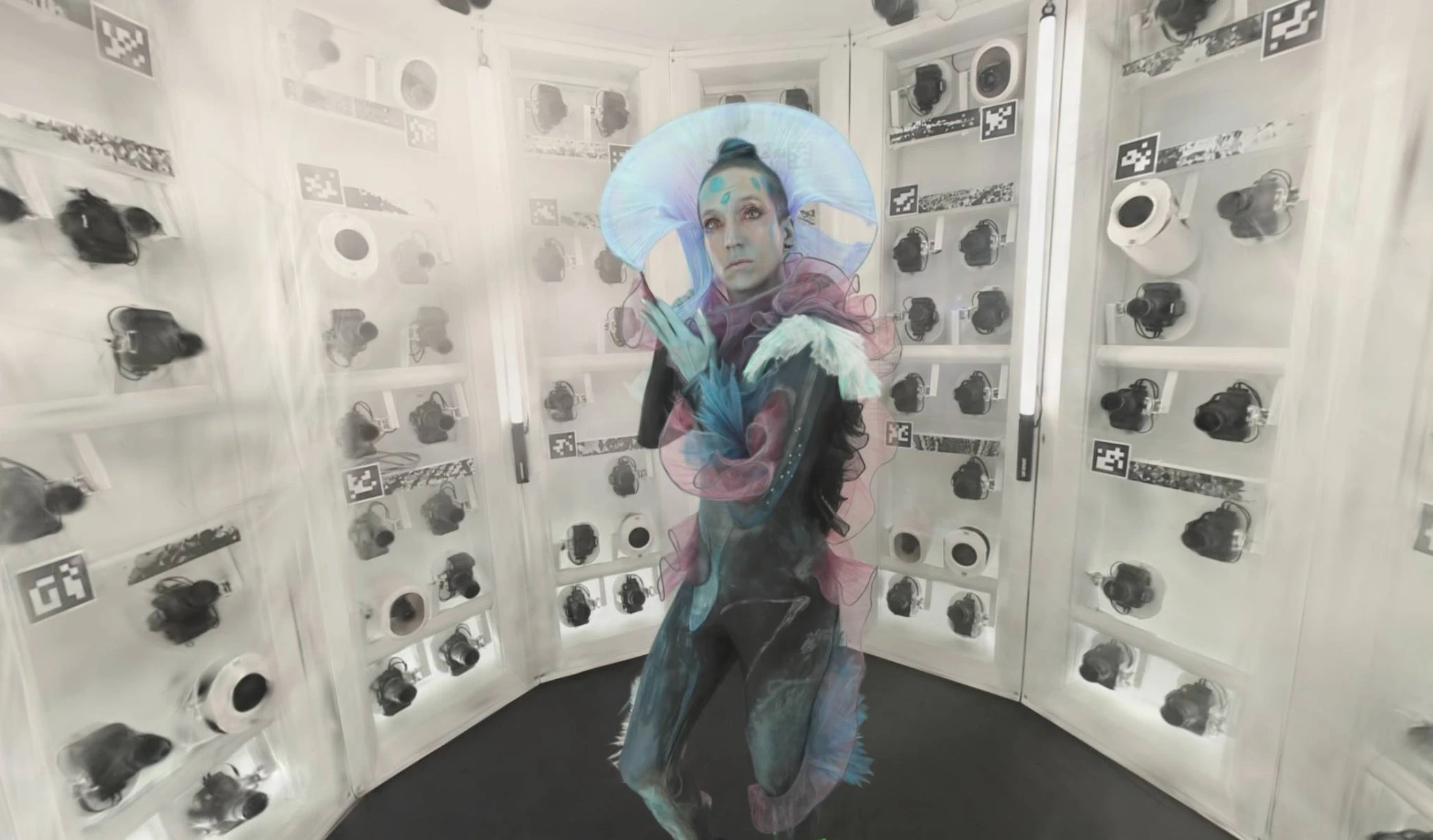
Augmented Ubiquity: The First 4D Gaussian Splat Captured with a botspot Scanner

360° Photography with the Momentum 2.0

botspot’s Automation Suite: Complete Control Over Your 3D Scanning Workflow
Top 3 Photogrammetry Software in Review