5 Things Cheap 3D Body Scanners Can't Do (That Professional Ones Can)
The market for 3D body scanners has expanded significantly over the past decade. Alongside professional-grade systems, a growing number of budget options have appeared, ranging from structured-light devices costing a few hundred euros to entry-level multi-camera rigs assembled from consumer hardware. For anyone considering an investment in body scanning technology, the price difference between these categories can seem hard to justify, until you look closely at what that difference actually buys.
This article is not about dismissing affordable solutions. For hobbyist use, early-stage R&D or low-stakes visualisation, a budget scanner may be entirely appropriate. But for professional workflows, in fashion, healthcare, film production, ergonomics, or digital heritage, the limitations of cheap systems matter enormously. Here are five things a budget 3D body scanner simply cannot do, and why professional systems are built the way they are.
1. Freeze Motion Completely Across the Whole Body
This is the most fundamental technical gap between budget and professional systems, and it affects everything downstream.
A low-cost 3D scanning booth typically captures images sequentially, either rotating a single camera or sensor around the subject, or triggering a limited number of cameras in a timed sequence. Even with a subject doing their best to stand still, the human body is never truly static. Breathing, micro-sways, involuntary muscle movement and subtle shifts in weight all introduce motion between frames. In sequential capture, these small movements accumulate into misalignment across the model, manifesting as ghosting, surface ripple, seams at the body's midline or blurred geometry at the extremities.
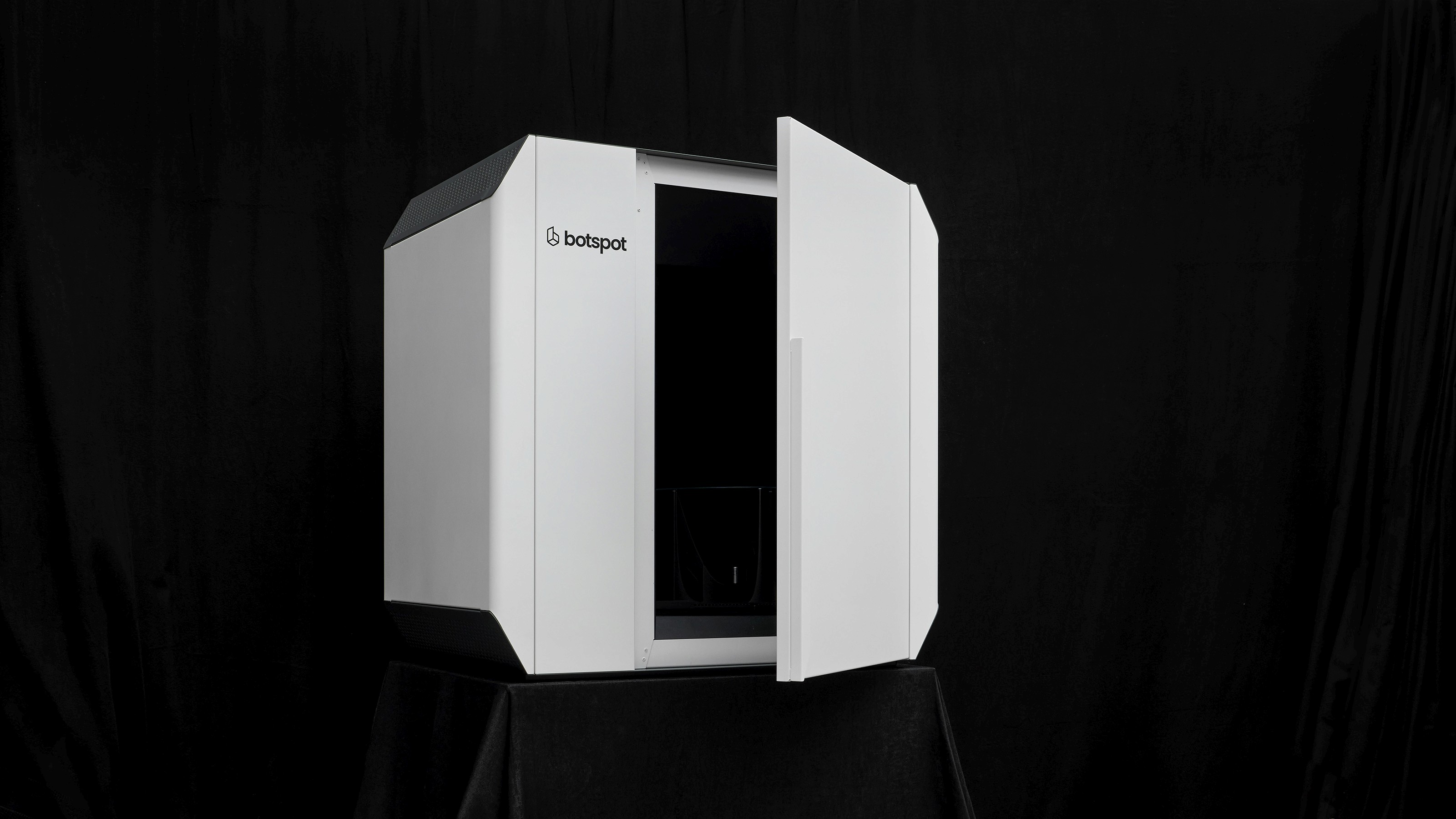
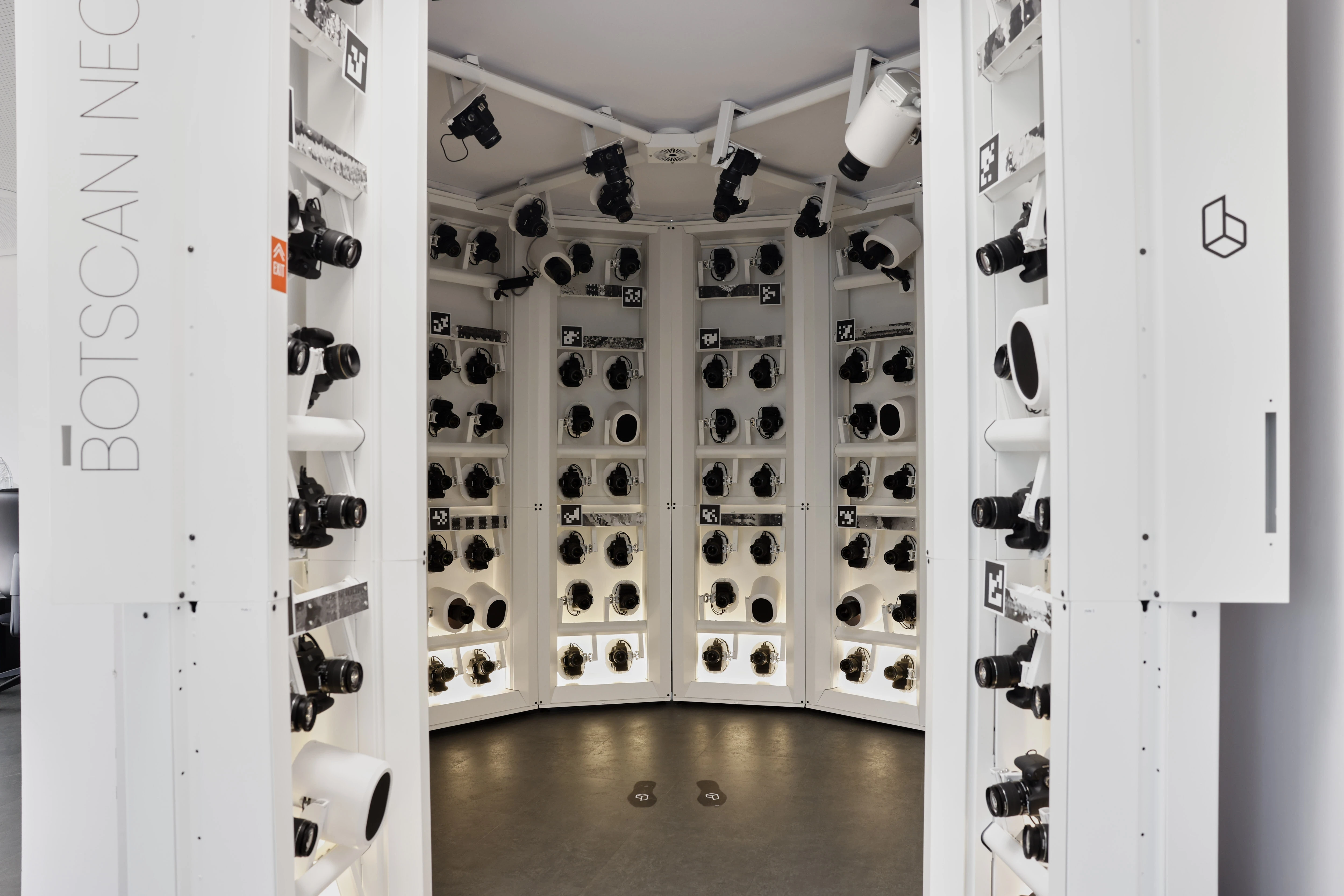
A professional full body 3D scanning booth solves this with true simultaneous capture. botspot’s NEO Full Body Scanner, for instance, fires 160 cameras at the same instant, covering the entire body from every angle in a single synchronized flash. There is no interval between the first and last frame, the subject's position is captured as a single frozen moment in time.
This matters not just for quality, but for what the data can be used for. Applications like virtual try-on, digital doubles for film and medical body measurement extraction all require geometrically consistent data. A model with motion artefacts cannot be reliably measured, rigged or rendered in a way that reflects the actual person.
Want to Know What botspot's NEO Full-Body Scanner Can Do?
160 cameras, one synchronized instant. See the full technical specs in our data sheet.
2. Deliver Consistent, Repeatable Results at Production Scale
A budget system might produce one impressive scan under ideal conditions. But professional body scanning technology is evaluated on consistency, what it delivers on the hundredth scan, or the thousandth, across different operators, different subjects and different days.
Cheap rigs are typically sensitive to ambient light, require manual calibration before each session, depend on careful operator setup, and can drift out of alignment over time as components loosen or shift. Any of these variables can silently degrade output quality in ways that are only apparent when you try to use the data downstream.
Professional 3D body scanners are engineered for repeatability. Controlled lighting environments eliminate the influence of ambient conditions. Automated calibration routines verify camera positions before every session. Rigid structural frameworks prevent drift. And integrated software pipelines, such as the automated scan-to-3D workflow built into botspot's systems using RealityScan, handle image processing, alignment and export consistently without relying on manual intervention.
For production environments processing dozens of scans per day, this is not a luxury. It is the difference between a system you can build a business around and one that requires constant supervision.
3. Capture Challenging Surfaces: Hair, Fabric and Skin Tone Variation
Photogrammetry and structured-light scanning both rely on visible surface information to reconstruct geometry. When that information is ambiguous, when surfaces are slightly reflective, semi-transparent, or lack sufficient texture variation, the reconstruction algorithm struggles or fails entirely.
Budget systems have almost no answer to this problem. Glossy materials cause specular highlights that confuse feature matching. Fine hair produces geometry that is noisy, fragmented or simply absent. Dark skin tones can be underexposed on systems with fixed lighting, leading to degraded texture and mesh quality. Translucent fabrics defeat depth sensors entirely.
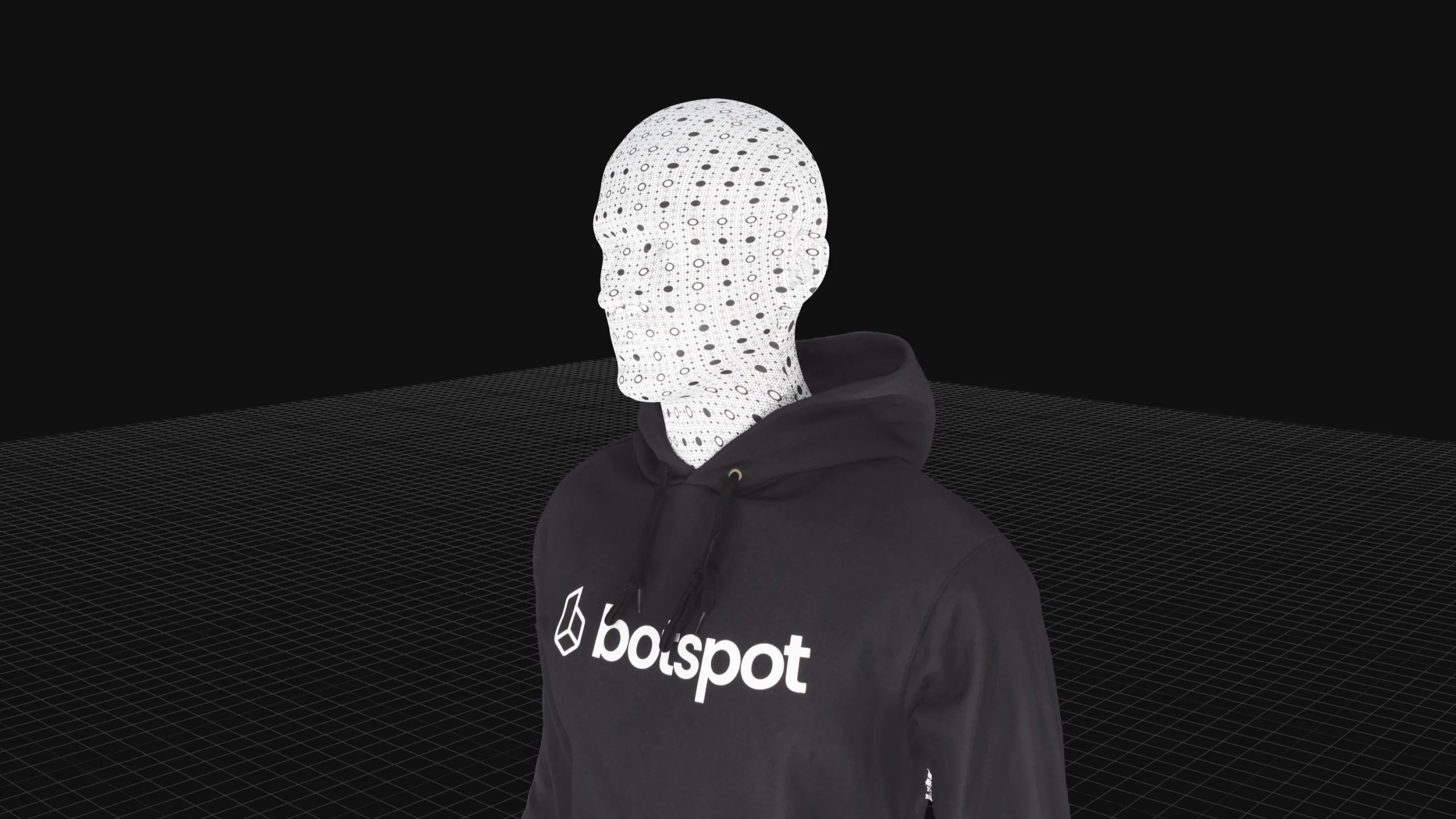
Professional systems address these challenges through hardware and software design. botspot's Digital Spray technology projects a high-contrast structured pattern onto surfaces that lack natural texture, giving the reconstruction algorithm rich feature data to work with without requiring any physical preparation of the object or subject. Studio-grade flash systems with consistent colour temperature handle a wide range of skin tones and fabric types. For scanning objects with highly reflective surfaces, something a standard 3D scan booth cannot manage at all, Digital Spray removes the need for temporary matte coatings that can damage delicate items.
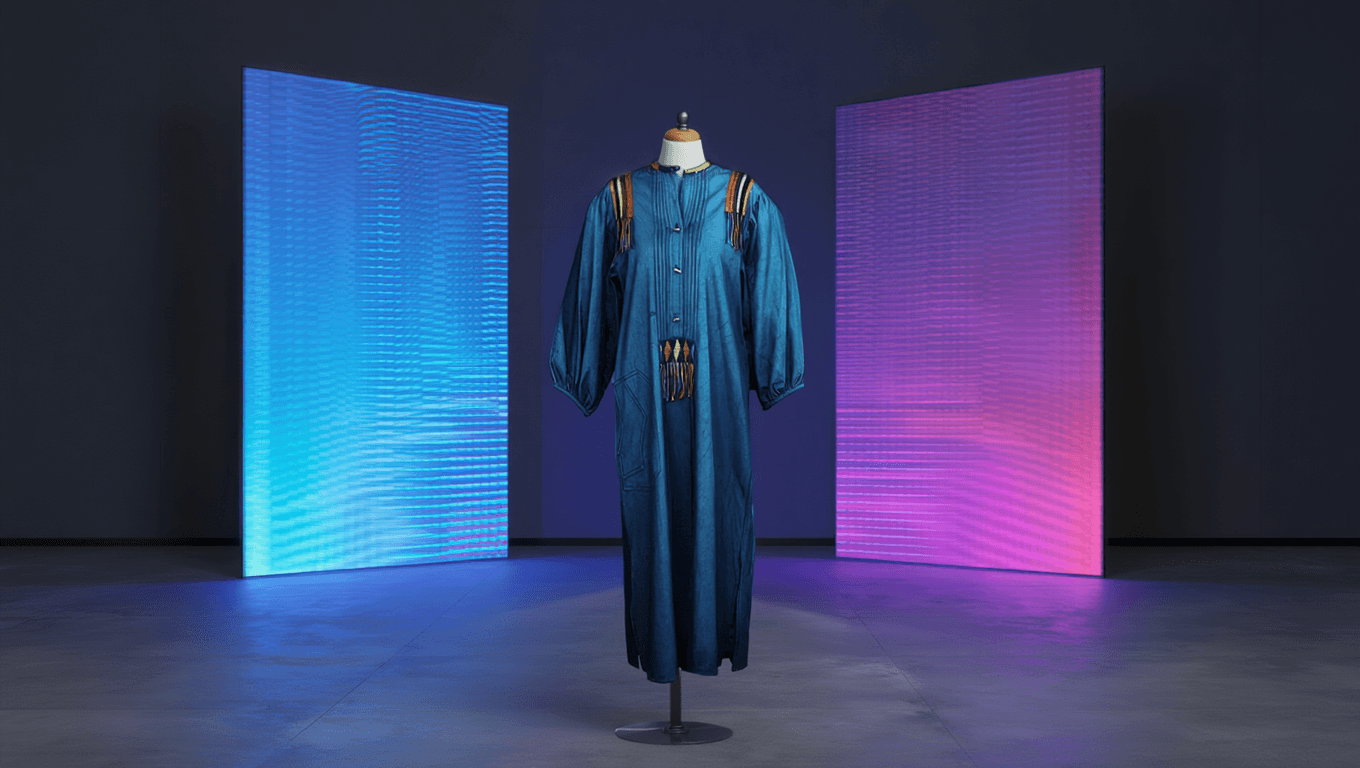
This capability becomes critical in applications like scanning historical costumes, where the surface complexity of aged textiles, embroidery and metallic decorations must be faithfully captured without any physical intervention.
See the Quality for Yourself
Download a sample 3D model and judge the output firsthand.
4. Produce Data That Integrates Cleanly with Professional Pipelines
Capturing a 3D model is only the beginning. In professional workflows, the scan output needs to integrate with downstream tools: measurement extraction software, animation rigs, game engines, CLO3D for garment simulation, or medical analysis platforms. The quality of that integration depends entirely on the quality of the input data.
Budget 3D body scanner outputs frequently suffer from issues that make them difficult or impossible to use professionally: incomplete meshes with holes around occluded areas, inconsistent scale, poor UV mapping, textures that don't align cleanly with geometry, or proprietary formats that don't export to standard OBJ, FBX or PLY files.
Professional systems are designed with the full pipeline in mind. The NEO outputs clean, high-resolution geometry processed through RealityScan, delivering models that work directly with retopology and UV workflows, body measurement extraction platforms like 3D Measure Up, and real-time engines. In the Filmmuseum Potsdam collaboration, raw OBJ files from the NEO were handed directly to 3D artists who worked with them through standard production pipelines (retopology, UDIM texturing and animation) without requiring extensive clean-up or pre-processing.
The same principle applies to body measurement workflows. As explored at 3DBODY.TECH 2025, measurement software can only extract accurate anthropometric data if the underlying geometry is geometrically consistent and complete. Scans with holes, noise or scale drift produce measurement errors that propagate invisibly into downstream decisions, with potentially serious consequences in medical or custom manufacturing contexts.
Processing Dozens of Scans a Day?
See how botspot's systems perform at production scale.
5. Serve as a Foundation for Next-Generation Capture Formats
Perhaps the most forward-looking limitation of cheap systems is that they cannot serve as a platform for emerging volumetric formats — most notably Gaussian Splatting and its 4D extension, which adds motion over time.
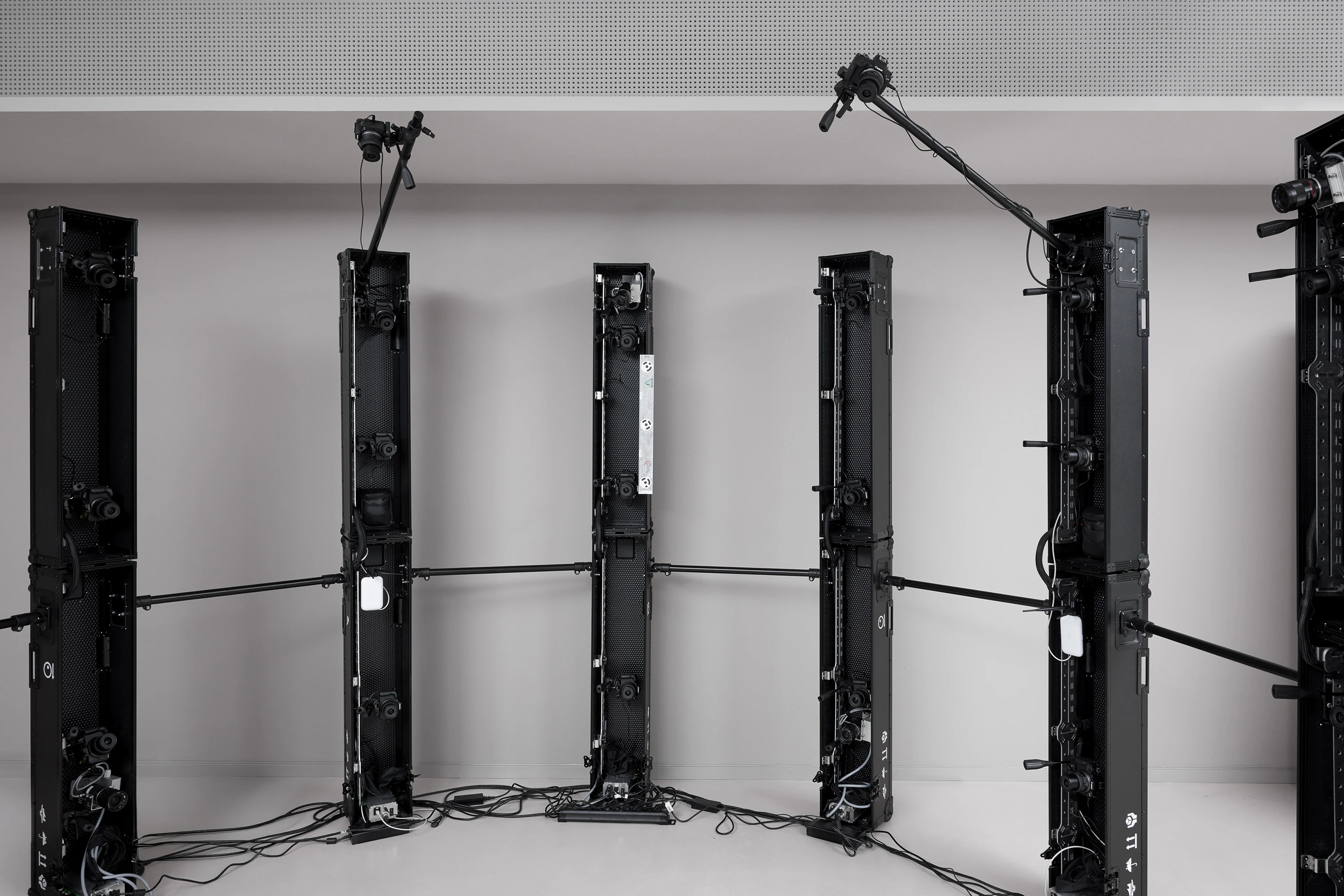
As demonstrated by the KreativInstitut.OWL team's Augmented Ubiquity project, the NEO's 112-camera array was used to capture a live dance performance as a fully volumetric, real-time-renderable 4D Gaussian Splat — something far beyond its original static-capture brief. What made this possible was not just camera count, but the precision of camera calibration, the density of angular coverage, and the quality of per-frame synchronisation.
4D Gaussian Splatting research has identified inaccurate camera positions and timing inconsistencies as primary failure modes. A budget 3D scanning booth with loosely calibrated cameras, limited coverage angles and consumer-grade synchronisation cannot provide the reliable multi-view foundation these pipelines need. Artefacts introduced at the capture stage cannot be removed in post-processing — they become structural features of the trained model.
As volumetric formats like 4DGS, NeRF and dynamic mesh capture continue to mature, the systems that will power professional applications in VR, film and digital human production are those with the camera density, synchronisation precision and image quality to serve as a trustworthy input stage. Professional body scanning technology built for accuracy today is already positioned for the workflows of tomorrow.
The Real Cost of Getting It Wrong
Budget systems have their place. But when the output needs to be measured, rigged, rendered, published or used as the basis for a decision — in fashion sizing, medical assessment, film production or heritage preservation — the hidden cost of poor scan quality is far higher than the upfront saving on hardware.
A professional full body 3D scanning booth is an infrastructure investment. The value it delivers is not just in any single scan, but in the consistency, coverage and clean data that make every scan reliably usable. That is what separates a tool you can build a professional workflow around from one you are constantly working around.
If you are evaluating 3D body scanner options for a professional application, contact the botspot team to discuss which system fits your pipeline, volume requirements and output quality needs.
Ready to See the Difference in Person?
Book a demo call and see what a professional 3D body scanner can do for your workflow.


Share on Facebook

Share on X


Share on LinkedIn